Cascina Vigna Park · tree 13 of 23
Black walnut
Juglans nigra
Also known as the American walnut, it is a majestic tree, native to North America, valued both for its fine dark timber and for its herbal properties.
For children, and not only for them… (video in Italian)
Tree sheet
- Habit
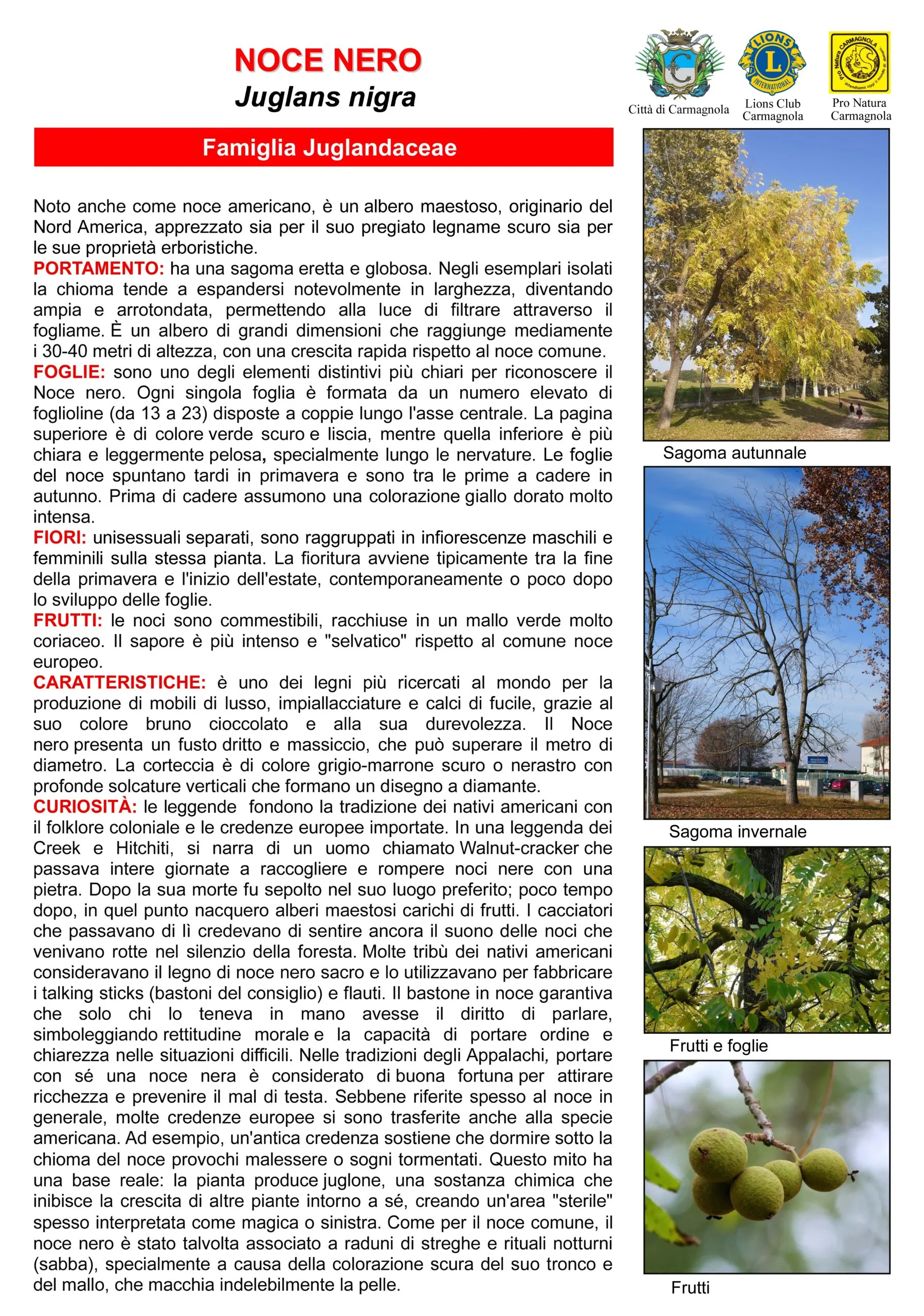
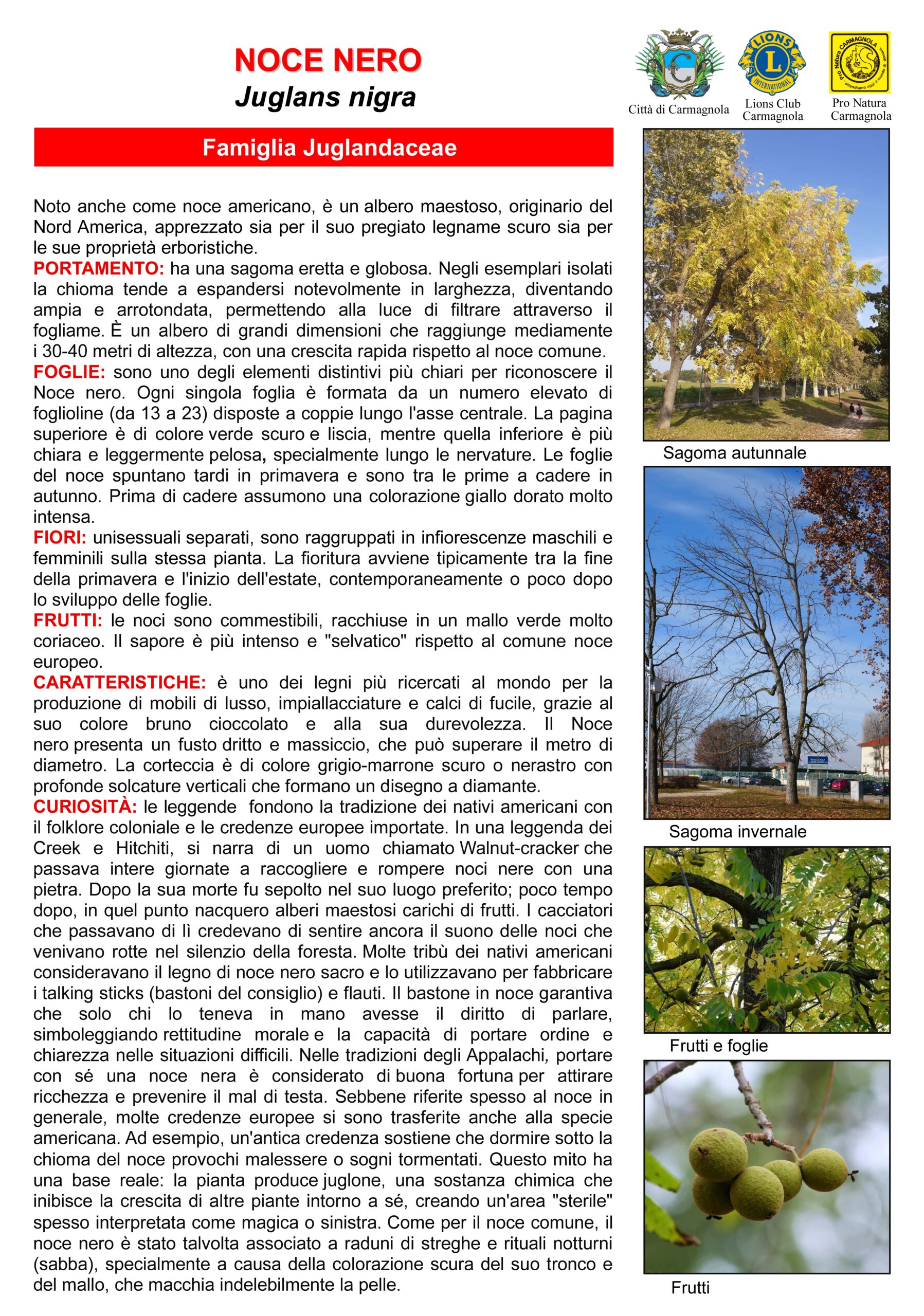
It has an upright, globose silhouette. In trees standing alone the crown tends to spread considerably in width, becoming broad and rounded and letting the light filter through the foliage. It is a large tree, reaching 30–40 metres in height on average, and it grows fast compared with the common walnut.
- Leaves
They are one of the clearest distinguishing features by which to recognise the black walnut. Each leaf is made up of a large number of leaflets (from 13 to 23) arranged in pairs along the central axis. The upper surface is dark green and smooth, while the lower one is paler and slightly hairy, especially along the veins. The leaves of the walnut come out late in spring and are among the first to fall in autumn. Before falling they turn a very intense golden yellow.
- Flowers
Unisexual and separate, they are grouped in male and female inflorescences on the same plant. Flowering typically takes place between late spring and early summer, at the same time as the leaves develop or shortly afterwards.
- Fruits
The nuts are edible, enclosed in a very leathery green husk. The flavour is stronger and "wilder" than that of the common European walnut.
- Features
It is one of the most sought-after timbers in the world for making luxury furniture, veneers and gunstocks, thanks to its chocolate-brown colour and its durability. The black walnut has a straight, massive trunk, which can exceed one metre in diameter. The bark is dark grey-brown or blackish, with deep vertical furrows that form a diamond pattern.
- Curiosities
The legends blend Native American tradition with colonial folklore and imported European beliefs. A legend of the Creek and Hitchiti tells of a man called Walnut-cracker, who spent whole days gathering black walnuts and cracking them with a stone. After his death he was buried in his favourite place; a short time later, majestic trees laden with fruit sprang up on that spot. Hunters passing by believed they could still hear the sound of nuts being cracked in the silence of the forest. Many Native American tribes regarded black walnut wood as sacred and used it to make talking sticks (council staffs) and flutes. The walnut stick ensured that only the person holding it had the right to speak, and symbolised moral uprightness and the ability to bring order and clarity to difficult situations. In Appalachian tradition, carrying a black walnut is considered lucky, attracting wealth and preventing headaches. Although they often refer to the walnut in general, many European beliefs have been transferred to the American species as well. For example, an old belief holds that sleeping beneath the crown of a walnut tree causes sickness or troubled dreams. This myth has a basis in fact: the plant produces juglone, a chemical that inhibits the growth of other plants around it, creating a "sterile" area that has often been seen as magical or sinister. Like the common walnut, the black walnut has sometimes been associated with gatherings of witches and night-time rituals (sabbaths), especially because of the dark colouring of its trunk and of its husk, which stains the skin indelibly.
The original sheet (in Italian)
Show the illustrated sheet