Cascina Vigna Park · tree 21 of 23
Silver birch
Betula alba o pendula
It is a common tree above all in the northern regions of Italy (Piedmont and Lombardy), but it is also found in the Apennines and on Mount Etna, preferring altitudes between 400 and 2,000 metres. Present throughout the Eurasian continent, from central Siberia to the Mediterranean, it is an essential component of temperate and boreal forests, where a great many insects and fungi depend on its presence.
For children, and not only for them… (video in Italian)
Tree sheet
- Habit
The tree can reach 20–30 metres in height and has slender, often drooping branches that give it an elegant, "weeping" look, responsive to every breath of wind. The sparse crown, which lets a great deal of light through, casts a very light, "patterned" shade.
- Leaves
Diamond-shaped or triangular with serrated edges, they turn a deep yellow in autumn.
- Flowers
Male (yellowish hanging catkins) and female (shorter, green catkins, upright and later hanging) on the same plant; they flower in spring (March–May) together with the leaves.
- Fruits
They are tiny, with a double wing. Before being scattered by the wind they are gathered in compact, elongated, hanging infructescences that remain on the tree until winter.
- Features
The silver birch is a pioneer and soil-stabilising species, typical of clearings and bare ground, and one of the most important for reforestation and the well-being of the natural environment. It has no particular requirements, although it prefers sandy soils. It forms pure woods or woods mixed with other broadleaves and conifers. It is a deciduous, short-lived tree that grows up to 30 metres. Known for its characteristic white bark, the birch tolerates intense cold (down to −20 °C). The root system, although branching and shallow (1–2 metres), develops deep vertical roots that keep the tree stable. It is much sought after for Scandinavian-style furniture and for fine veneers (figured birch). Thanks to its workability, it is used for toys, carvings, kitchen utensils and turned objects.
- Curiosities
Known as the "Lady of the Woods", the birch features in many legends and folk traditions, especially in Nordic and Slavic cultures, where it is venerated as a symbol of purity, rebirth and protection. In the Middle Ages the schoolmaster's sceptre was often made of plaited birch twigs, symbolising authority and wisdom. In this regard it should be remembered that the master's sceptre or rod represented the power to teach, the licentia docendi. It was a symbol of prestige that set the master apart from the students, similar to the baton of command or the bishop's crozier. The rod could be used as an instrument of correction. Because of its elegance and its white stem, the birch is often identified with a female figure or a fairy. In Russia it was the custom to dress a birch trunk in women's clothes at Pentecost to call for rain and the fertility of the fields. In the Celtic tree calendar the birch opens the year precisely because of this link with regeneration. Again in Russia, but also in other Slavic cultures, it was believed that birch branches could drive away evil spirits and negativity, so its wood was used to make babies' cradles, to save them from dark influences. As they protected against evil, its branches were hung on doors to attract good luck. The traditional witches' broom was often made of birch twigs, used ritually to "sweep away" the old energies of the previous year.
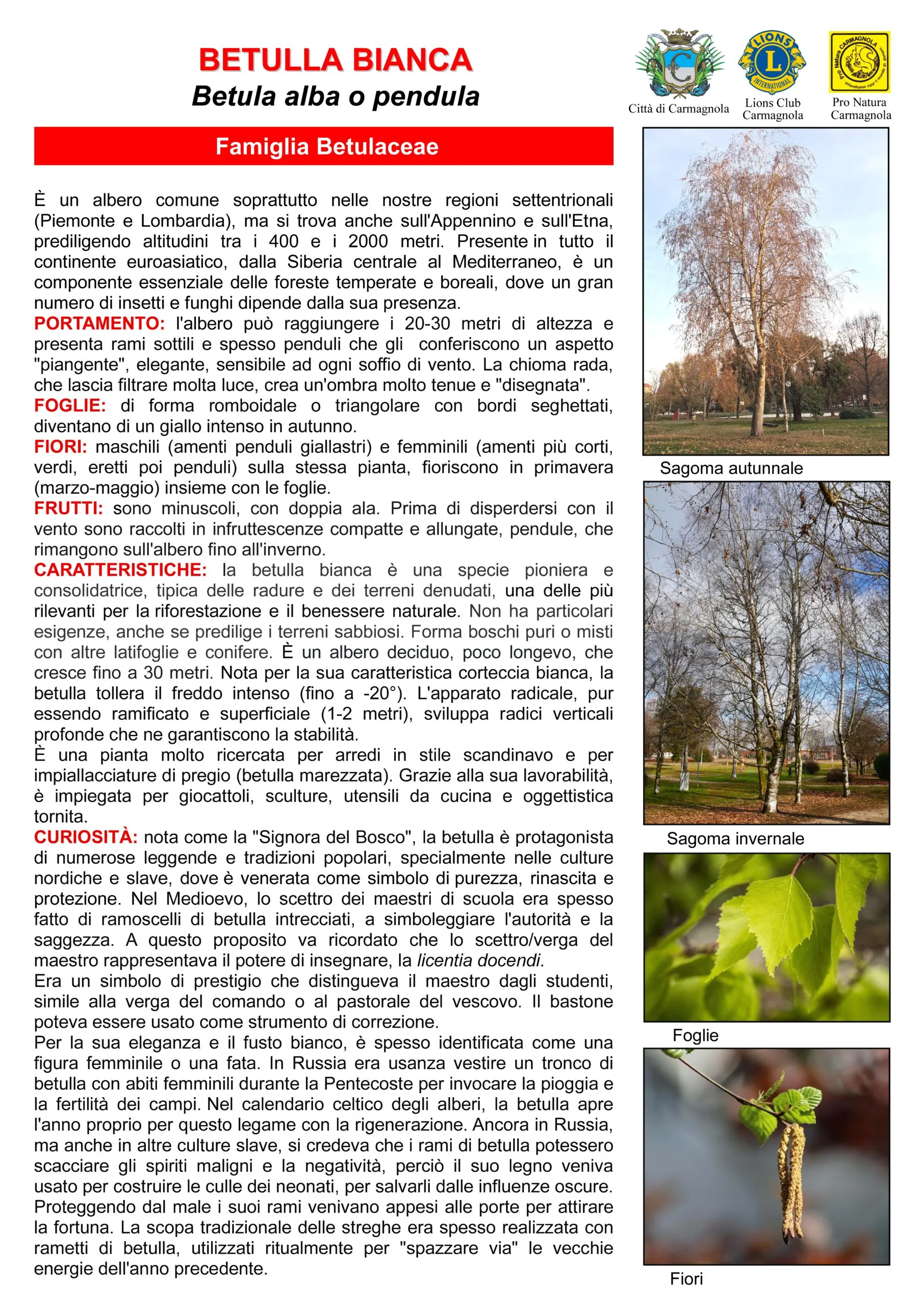
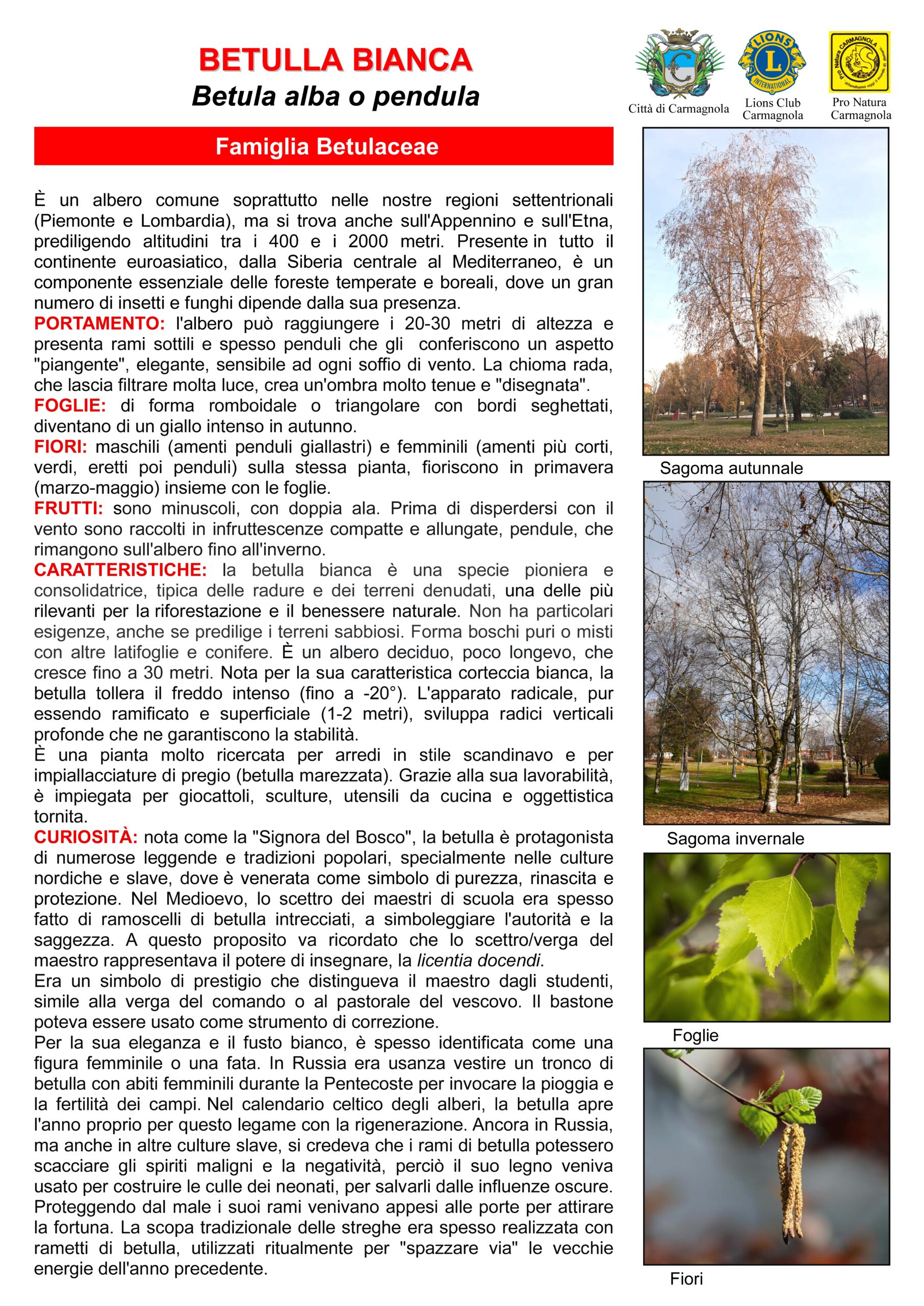
The original sheet (in Italian)
Show the illustrated sheet